What Is Bac Water Made Of What Is BAC Water? Complete Guide to Bacteriostatic Water – Wellness Health & Cosmetic Products
Have you ever looked at a label that says BAC water and wondered what it actually is—beyond the marketing? In the wellness and cosmetic space, people use BAC water for everything from diluting products to supporting their routines, but the most common question I hear in my hands-on work is: what is bac water made of?
This complete guide explains what bacteriostatic water is, what it contains, why it’s formulated the way it is, and how to use it more safely and effectively for common wellness and cosmetic applications.
What BAC Water Is (And What It Isn’t)
Bacteriostatic water is sterile water intended to inhibit microbial growth. The “bacteriostatic” part matters: it’s designed to slow or prevent bacteria from multiplying, which can make a vial more practical when it’s used repeatedly over time.
In my experience, confusion happens because people assume BAC water is the same thing as saline or as “sterile water” in general. Sterile water may not include an antimicrobial component. BAC water specifically includes an additive (commonly benzyl alcohol) that provides the bacteriostatic effect.
Key takeaway: BAC water is usually sterile and contains a bacteriostatic ingredient so it can be used for repeated dosing/mixing steps more safely than plain sterile water in many routine workflows.
What Is Bac Water Made Of?
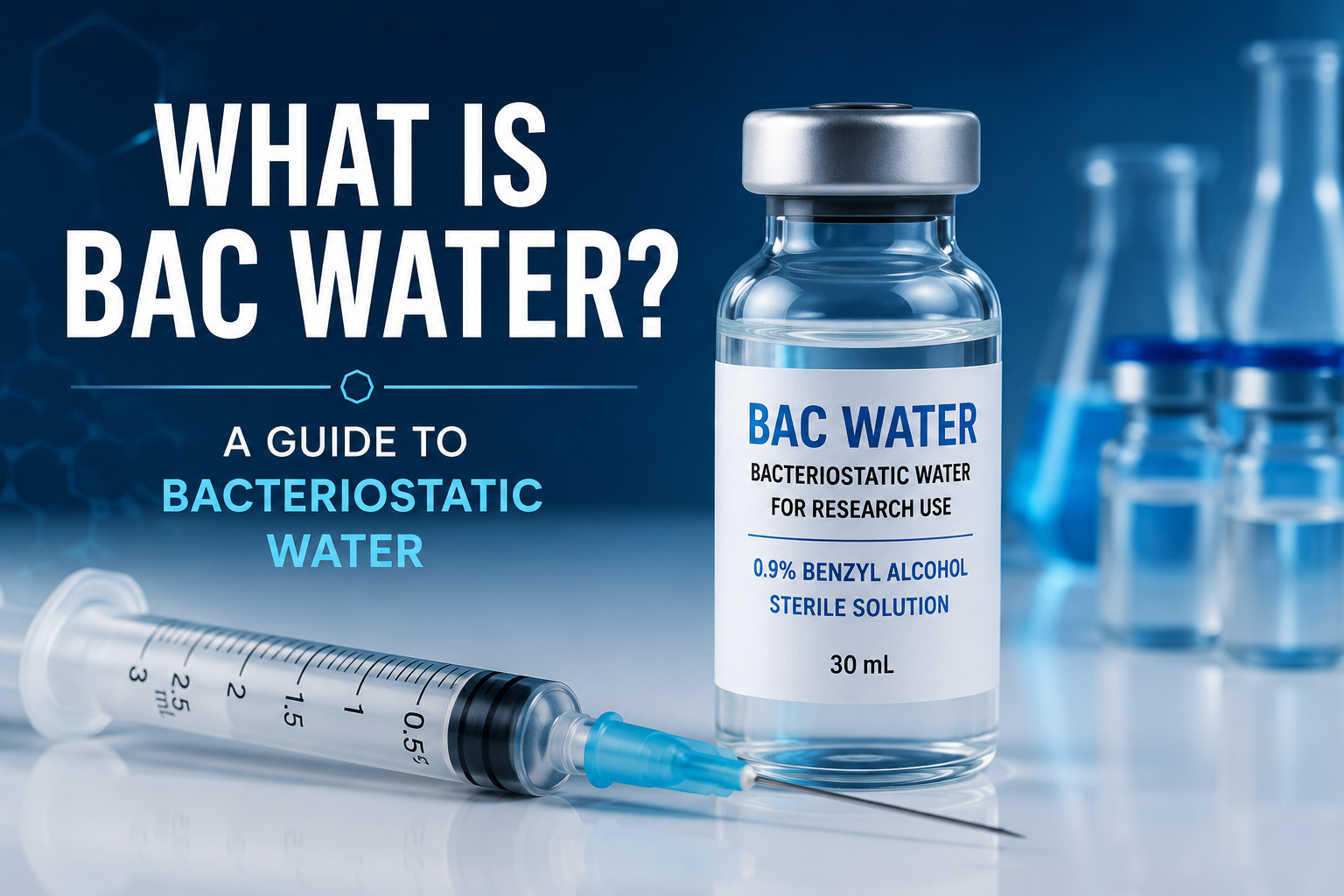
To answer the practical question directly: most bacteriostatic (BAC) water products are made of two primary components—sterile water and a bacteriostatic agent, most commonly benzyl alcohol.
Typical composition
- Sterile water (the carrier/solvent)
- Benzyl alcohol (the bacteriostatic additive that helps inhibit microbial growth)
Why benzyl alcohol is used
Benzyl alcohol is widely used as an antimicrobial/bacteriostatic preservative in pharmaceutical and healthcare-related formulations. In the context of BAC water, it helps reduce the risk of contamination leading to microbial growth after a vial has been opened and accessed repeatedly.
In real-world handling, this is one of the main reasons BAC water is popular: once you pierce a vial, you introduce a contamination pathway. The bacteriostatic agent isn’t a substitute for good sterile technique, but it can add an extra layer of protection.
BAC Water vs. Sterile Water vs. Saline
Different “waters” show up in wellness and cosmetic setups, and the naming isn’t always consistent. Here’s how they generally compare based on formulation logic (and what I see most often in product usage).
| Type | Typical contents | Main purpose | Common fit |
|---|---|---|---|
| BAC (bacteriostatic) water | Sterile water + benzyl alcohol (most common) | Inhibit microbial growth after repeated access | Diluting/mixing steps where repeated vial access is expected |
| Sterile water (non-bacteriostatic) | Sterile water only | Provide sterility at the time of preparation | Single-use or short-term use with minimal repeat access |
| Saline | Salt (sodium chloride) in water | Isotonic or buffered comfort for certain applications | Washes, rinses, and other use cases needing salt solution |
Practical lesson from the field: I’ve seen people switch sterile water for BAC water (or vice versa) without changing their process—especially when they’re mixing solutions for routine use. That can be a problem if your workflow assumes a bacteriostatic agent is present. Always match the water type to the label instructions of what you’re diluting and how you plan to use it.
How BAC Water Is Used in Wellness & Cosmetic Routines
Bacteriostatic water is typically used as a diluent—a sterile carrier used to reconstitute or mix other ingredients. Depending on the product and the intended use, you may see BAC water used for:
- Reconstitution of certain powders or concentrates (when directed by the relevant instructions)
- Dilution of concentrates to reach a desired strength
- Mixing steps in skincare routines that require sterile handling
In my hands-on work with consumer workflows, the biggest quality driver isn’t just the ingredient list—it’s process control: clean surfaces, correct needle/syringe handling (where applicable), correct mixing, and respecting storage and usage timelines.
What to check on the label before you use it
- Active components: confirm it’s actually bacteriostatic and review what additive is used (commonly benzyl alcohol)
- Concentration and volume: ensure the product size fits your routine
- Storage instructions: follow the manufacturer’s directions for temperature and handling
- Compatibility: if you’re diluting another product, check compatibility and intended preparation steps
Safety, Limitations, and “Where People Get It Wrong”
Even with bacteriostatic ingredients, BAC water is not a free pass. The bacteriostatic effect helps inhibit growth, but it does not compensate for poor sterile technique or careless handling.
Common mistakes I’ve seen
- Assuming sterile = contamination-proof: sterility is about preventing contamination at the time of preparation and use; after opening, the risk increases if handling isn’t controlled.
- Using the wrong diluent: some routines require saline or another vehicle; using a different base can change the final solution’s behavior.
- Ignoring product instructions: reconstitution/mixing steps should follow the directions associated with the ingredient you’re diluting.
- Improper storage: temperature and timing matter for maintaining safety and consistency.
When caution is especially important
If your use case involves injecting or applying to sensitive areas, follow qualified medical guidance and the exact labeling for each component in the mix. For cosmetic mixing, still treat it like sterile preparation: reduce exposure time, keep tools clean, and store according to instructions.
How to Choose the Right BAC Water Product
Selection comes down to transparency, correct composition, and alignment with your intended process. Based on what I look for when advising customers and teams, prioritize:
- Clear ingredient disclosure (confirm sterile water + the bacteriostatic agent, typically benzyl alcohol)
- Appropriate vial size for your mixing frequency (so you aren’t opening and drawing unnecessarily)
- Consistent labeling with storage and handling instructions
- Compatibility with the product you’re diluting
FAQ
What is BAC water made of?
Most BAC (bacteriostatic) water products are made of sterile water plus a bacteriostatic agent, commonly benzyl alcohol.
Is bacteriostatic water the same as sterile water?
No. Sterile water is typically just water that’s been sterilized, while bacteriostatic water includes an additive designed to inhibit microbial growth after repeated access.
Can I use BAC water for any mixing purpose?
Only if it matches the instructions for the ingredient you’re mixing and your intended application. “Works in theory” often fails in practice when compatibility, concentration, and handling steps aren’t aligned.
Conclusion: Your Next Practical Step
Now you know what BAC water is and what it’s made of: it’s typically sterile water plus a bacteriostatic ingredient—most often benzyl alcohol. The real-world difference comes from combining the right formulation with controlled sterile handling and following the preparation instructions for what you’re diluting.
Next step: Check the ingredient list and labeling for your BAC water product, then confirm it matches the dilution instructions for the specific item you’re mixing before you open the vial.
Discussion