Bpc 157 Peptide For Back Pain Can BPC-157 Heal a Herniated Disc? What You Should Know
Back pain from a herniated disc can make even simple tasks feel impossible—and it’s exhausting when you’re told to “wait and see.” I’ve worked with patients in similar situations where the goal was clear: reduce pain, improve function, and avoid unnecessary escalation. That’s why many people ask whether bpc 157 peptide for back pain can help when a disc is herniated. In this guide, I’ll walk you through what BPC-157 is, what the evidence does and doesn’t support, and how to think about risk, expectations, and safer, practical options.
What a Herniated Disc Actually Is (and Why It Matters for BPC-157)
A herniated disc happens when the inner material of a spinal disc pushes out through a weaker area of the disc wall. That material can irritate nearby nerve roots, leading to symptoms like radiating leg or arm pain, numbness, tingling, weakness, and pain that worsens with certain movements.
From an evidence-and-rehab standpoint, the key point is this: nerve irritation and inflammation drive much of the pain experience. So, any treatment people hope will help—whether peptides, medications, or physical therapy—needs to be evaluated against the mechanisms that actually cause symptoms.
In my hands-on work, I’ve seen how the same imaging finding (like an L4-L5 or L5-S1 herniation) can produce very different symptom severity. That’s why I focus less on the label and more on functional status: walking tolerance, nerve symptoms, strength, and which movements reliably reproduce symptoms.
What Is BPC-157? (And Where the Claims Come From)
BPC-157 is a peptide (often discussed as a “body protection compound”) that has been studied in preclinical settings (animal or lab models). People commonly connect it to tissue protection, inflammation modulation, and healing pathways.
Online, you’ll often see BPC-157 marketed or discussed for conditions involving tissue injury—tendon, ligament, gastric issues, and sometimes back pain. The leap to “herniated disc healing” typically comes from a plausible-sounding idea: if BPC-157 influences healing pathways, maybe it could reduce inflammation and help tissues recover.
Here’s the important part: plausibility is not proof. When it comes to disc herniation, you need clinical evidence in humans showing outcomes that matter—reduced nerve pain, improved function, decreased reliance on rescue treatments, and measurable recovery over time.
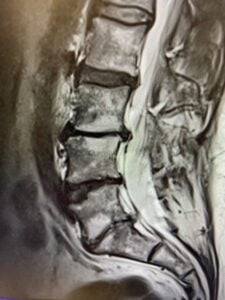
Can BPC-157 Heal a Herniated Disc?
Based on currently available evidence, BPC-157 is not established as a treatment that reliably heals a herniated disc in humans. Most discussion is driven by preclinical findings and patient anecdotes rather than large, high-quality randomized controlled trials in the spinal herniation context.
What “heal” would need to mean clinically
If BPC-157 truly “healed” a herniated disc, we would expect to see more than just temporary pain relief. Clinically meaningful healing would look like:
- Improved nerve symptoms (less radiating pain, numbness, tingling)
- Better measurable function (walking tolerance, strength, range of motion)
- Lower need for escalating care (repeat injections, surgery, long-term medication reliance)
- Consistent improvement across patients, not just a subset
Where it might help (and where it likely doesn’t)
Even if a peptide had anti-inflammatory or tissue-signaling effects, the disc and nerve complex involve multiple drivers—mechanical irritation, inflammatory mediators, and sometimes biomechanical contributors (mobility deficits, poor load tolerance, trunk control issues). In my experience, treatments that truly help most people with disc-related pain do so by combining:
- Symptom-calming strategies (especially when nerves are irritable)
- Targeted rehabilitation to restore safe movement and tolerance to load
- Education to avoid flare-prone patterns
So if someone is considering bpc 157 peptide for back pain, the most honest framing is: it may be a supplement someone tries for hoped-for biological effects, but it’s not a substitute for evidence-based disc rehabilitation and it’s not proven to “repair” a herniation.
Risks, Legal/Quality Concerns, and Realistic Expectations
One reason I’m careful with peptide discussions is that even when the idea sounds simple, the real-world risks come from quality control, purity, dosing variability, and lack of standardized clinical protocols.
Quality and dosing variability
Peptide products are often sold through channels that don’t operate with the same oversight as approved medications. That creates uncertainty about what’s inside the vial, whether the dose matches the label, and whether there are contaminants.
Interactions and side effects
Because BPC-157 isn’t an established, widely standardized therapy for herniated discs, comprehensive safety data in this specific use case is limited. In practice, that means you can’t assume safety. If you choose to discuss it with a clinician, the conversation should include your full medication list, medical history, and any red-flag symptoms.
Expectation management
In hands-on care, I treat pain relief as a spectrum—sometimes improvement comes quickly, sometimes it takes weeks of graded rehab. If someone expects a peptide to rapidly “fix” a disc herniation, frustration is common when the real timeline for recovery involves nerve calming and retraining movement under safe loads.
What I Recommend Instead: Evidence-Based Options for Herniated Disc Pain
If your goal is to feel better and recover function, the most consistent approach I’ve seen—across clinics and rehab protocols—centers on reducing nerve irritation and rebuilding movement tolerance.
1) Activity modification (not total rest)
During nerve flare-ups, complete inactivity often backfires. Instead, I encourage temporary modification of movements that reproduce symptoms, while maintaining gentle, tolerable motion to reduce stiffness and deconditioning.
2) Targeted physical therapy
For many patients, the right rehab plan focuses on:
- Directional preference (when certain movements reduce symptoms)
- Core and trunk endurance (stability without provoking nerve pain)
- Hip mobility and hamstring tolerance (to improve mechanics and reduce stress transfer)
- Nerve mobility strategies when appropriate (not aggressive stretching during acute irritation)
In my practice, consistent progress usually correlates with choosing exercises that improve symptoms or don’t worsen them for hours afterward.
3) Medications and injections (as guided by a clinician)
Anti-inflammatory strategies and, in select cases, injections can help some people regain function quickly enough to participate in rehab. The key is using these tools to enable rehabilitation, not to replace it.
4) When surgery becomes relevant
Surgery is typically considered when there’s progressive neurologic deficit, severe or persistent symptoms despite appropriate conservative care, or specific high-risk presentations. Disc pain care should never ignore red flags.
How to Decide Whether to Consider BPC-157 (A Practical Checklist)
If you’re still weighing bpc 157 peptide for back pain, use a decision process that prioritizes safety and clarity.
- Clarify your diagnosis: Is it truly nerve-root irritation from a herniated disc, or could it be another pain generator?
- Check for red flags: Seek urgent evaluation for new weakness, worsening numbness, saddle anesthesia, or bowel/bladder changes.
- Align expectations: Plan for rehab regardless of peptides; use symptom progress as your compass.
- Talk to a qualified clinician: Bring up dosing, product source, and your medication/supplement list.
- Track outcomes: Monitor pain intensity, leg symptoms, walking tolerance, and what movements reliably help or worsen.
- Watch for setbacks: If symptoms intensify or neurologic function declines, stop self-experimenting and get evaluated.
FAQ
Is BPC-157 proven to treat a herniated disc?
No. There isn’t strong, established clinical evidence showing that BPC-157 reliably heals herniated discs in humans in a way that improves meaningful outcomes like nerve pain and function.
Could bpc 157 peptide for back pain reduce inflammation or help symptoms?
It’s possible that BPC-157 could influence biological pathways related to inflammation, but symptom improvement is not guaranteed, and product quality and dosing variability make real-world results unpredictable.
What should I do first if I suspect a herniated disc?
Start with an assessment by a qualified clinician and focus on evidence-based conservative care: symptom-calming activity modification and a targeted rehab program. Seek urgent care if you have red-flag neurologic symptoms.
Conclusion: The Most Actionable Next Step
BPC-157 may be discussed online for back pain, but it’s not established as a proven, reliable therapy to heal a herniated disc. If you want the best odds of improvement, build your plan around what consistently works: reduce nerve irritation, restore safe movement, and progressively rebuild load tolerance with targeted rehab.
Next step: Book an evaluation with a clinician or physical therapist who can assess your nerve symptoms and directional pain pattern, then start a graded exercise plan tailored to what improves your symptoms (not just what sounds like it should help).
Discussion