Bpc 157 Capsules Efficacy BPC-157: Miracle Healing Peptide or Hidden Danger?
Introduction
If you’ve ever searched for “miracle healing” compounds after an injury, you’ve probably run into BPC-157. I first noticed the hype when a client asked about it during a rehab cycle—then mentioned they were considering buying capsules despite not having any clear, evidence-based guidance. That’s the exact gap this article addresses.
In this post, I break down whether bpc 157 capsules efficacy is supported by credible data, what the plausible science says (and doesn’t say), and the practical risks people often overlook when they self-source peptides. You’ll leave with a clear, grounded way to evaluate claims and decide what to do next.
What BPC-157 Is (and Why It Became a “Healing” Peptide)
BPC-157 is a peptide originally investigated for its potential roles in healing processes. The name often appears in sports and alternative-medicine circles, where it’s frequently marketed as improving recovery from soft-tissue injuries, supporting the gastrointestinal (GI) tract, and helping general tissue repair.
Here’s the key: the reason BPC-157 became popular is not that it’s been conclusively proven in large human trials for routine “miracle” outcomes. Instead, interest grew from preclinical findings and mechanistic hypotheses—along with the way online communities translate those findings into athlete-friendly “recovery” narratives.
In my hands-on work reviewing supplementation protocols for injury recovery, I’ve seen a repeating pattern: people assume that if a compound shows promising effects in lab or animal studies, then the same outcome should be expected in humans, at OTC-like product dosing, with consistent purity. That jump is often where expectation diverges from reality.
Where the Evidence Usually Comes From
Most of the persuasive claims around BPC-157 are built on a mix of:
- Preclinical research (cells/animals) suggesting activity relevant to tissue repair pathways.
- Mechanistic speculation (how certain biological signals might influence healing).
- User reports (subjective improvements, timelines, and anecdotes).
What’s commonly missing from sales-focused discussions is robust, placebo-controlled, dose-ranging human evidence for the exact use case people buy for—like “capsule efficacy for tendon/ligament recovery.”
BPC-157 Capsules Efficacy: What “Works” Actually Means
When people search bpc 157 capsules efficacy, they’re usually asking a practical question: “If I take capsules, will I heal faster, and is it worth the risk and cost?” To answer that properly, you have to separate three ideas that marketing often blends together:
1) Biological plausibility vs. clinical proof
A peptide can be biologically active in experiments without being proven to deliver consistent clinical benefits in humans. In my experience, the strongest signal for “efficacy” comes from studies designed to reduce bias—randomization, placebo controls, and meaningful outcome measures. When those are missing, claims tend to be speculative.
2) Route and formulation matter
Even if BPC-157 is active, the form—capsules versus other delivery methods—raises questions about absorption, stability, and bioavailability. Capsules introduce variables like stomach pH conditions, degradation, and how efficiently the peptide reaches systemic circulation.
That doesn’t mean capsules can’t work, but it means you shouldn’t assume “capsule = same efficacy as what you see referenced elsewhere.” In self-experimentation discussions, this is one of the most common misunderstandings I’ve encountered: people treat product form as interchangeable.
3) Consistent dosing requires consistent product quality
For any peptide product, quality control is central. In real-world sourcing, there can be variation in:
- actual content vs. label claim (dose accuracy)
- purity (contaminants or byproducts)
- stability over time (storage and shelf-life)
If a product is inconsistent, “efficacy” becomes difficult to interpret—because results (or side effects) may reflect product variability rather than the peptide’s true effect.
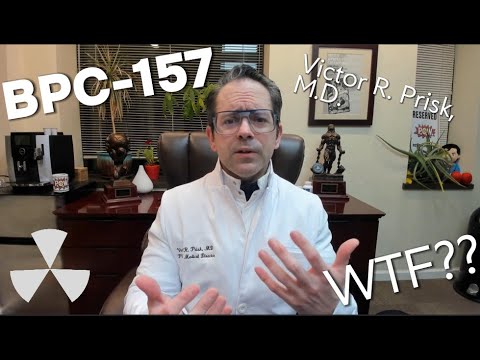
Miracle Healing Peptide or Hidden Danger?
This is the heart of the title, and it deserves a balanced answer. I don’t treat “miracle healing” marketing as a reliable guide. Instead, I think in terms of two categories: known limitations and real-world risks.
Key limitations to understand
- Human evidence is limited for many of the recovery claims made online.
- Outcomes are often defined loosely (“feels better,” “recovery accelerated”) rather than using standardized clinical endpoints.
- Capsules may differ from other delivery approaches in absorption and stability.
Where hidden danger can show up
“Danger” doesn’t always mean dramatic, headline-grabbing events. In the settings where I’ve seen people get into trouble, risks often come from the combination of uncertainty plus poor oversight:
- Product quality uncertainty: inconsistent dosing and purity are practical risks.
- Misaligned expectations: some people delay evidence-based care in favor of unproven peptides.
- Drug-supplement interactions: if you’re taking NSAIDs, anticoagulants, or other medications, you need clinical context.
- Self-treatment of serious injuries: pain relief or perceived improvement can mask injuries that require imaging or specialist management.
In short: the danger is often less about “the peptide definitely harms everyone,” and more about the uncertainty chain—limited evidence, variable product quality, and clinical decision-making without medical supervision.
How to Evaluate Claims of BPC-157 Capsules Efficacy
If you’re considering BPC-157 capsules, use a checklist approach. I’ve found this method reduces impulsive buying and forces the conversation back to evidence and safety.
Evidence quality questions
- Is the claim based on human trials relevant to the same form (capsules) and comparable dosing?
- Are outcomes measured objectively (range of motion, imaging changes, standardized pain scales), not just anecdotal reports?
- Is there a comparator (placebo or standard care), or is it “everyone improved”?
Product quality questions
- Is there third-party testing (and do you get the actual report)?
- Does testing cover purity and contaminants rather than only “it contains the label ingredient”?
- Is the dosing clearly specified and consistent across batches?
Clinical decision questions
- Do you have a diagnosis (not just “it hurts”) and an evidence-based rehab plan?
- Are you monitoring progression (symptoms, function, and load tolerance) rather than chasing a single supplement?
- What would make you stop if something worsens?
Practical Next Steps If You’re Considering It
I’m not going to tell you to buy or avoid BPC-157. What I will recommend is a safer, more informed process that aligns with how I approach real rehab decisions:
- Get a clear injury picture (exam, and imaging if indicated) so “recovery” has a target.
- Build your plan around fundamentals: progressive loading, physical therapy, sleep, and nutrition—then evaluate any supplement as an add-on, not the main strategy.
- Demand quality documentation for any capsule product (third-party verification, batch consistency, and full transparency).
- Track outcomes for at least a few weeks using simple metrics (pain with activity, range of motion, functional tests your clinician uses).
If you can’t answer those points convincingly, you’re not really evaluating “bpc 157 capsules efficacy”—you’re evaluating marketing and variability.
FAQ
Does bpc 157 capsules efficacy have strong human evidence?
Human evidence for specific recovery outcomes is not strong enough to treat it as proven. Claims often rely on preclinical data and community reports rather than large, well-controlled clinical trials demonstrating consistent benefits for capsule-based use.
What are the biggest risks with BPC-157 capsules?
The most common real-world risks are product quality uncertainty (dose/purity variability), misaligned expectations that delay evidence-based care, and self-treatment of injuries that may need proper diagnosis and structured rehabilitation.
How can I reduce risk if I’m determined to try it?
Use objective tracking, ensure third-party testing and clear batch labeling, and keep the core of your recovery plan anchored in clinician-guided rehab. If symptoms worsen or you’re not improving, stop and get medical guidance.
Conclusion
BPC-157 is often presented as a “miracle healing peptide,” but when you drill down into bpc 157 capsules efficacy, the real story is uncertainty: limited clinical proof for many advertised recovery goals, potential differences in route/formulation, and meaningful product-quality concerns.
Next step: If you’re considering BPC-157 capsules, start by documenting your injury diagnosis and baseline function, then require third-party quality verification and run a structured, time-bound outcome tracking plan—so you can judge results against evidence rather than hype.
Discussion