Peptide Bpc 157 Reviews BPC-157: Miracle Healing Peptide or Hidden Danger?
Introduction: When “miracle healing” meets real-world risk
If you’ve been browsing peptide bpc 157 reviews, you’ve probably seen two narratives repeat: people swear it helped their injuries and gut symptoms, while others warn it’s a risky, under-regulated product. I’ve worked with clients and teams across supplement compliance, lab testing workflows, and injury-recovery planning—and the hardest part isn’t the debate itself. It’s separating “someone felt better” from evidence that holds up, especially when peptides are often sold in ways that make verification difficult.
In this article, I’ll explain what BPC-157 is, what the strongest arguments for and against it really are, what you should look for when reading peptide bpc 157 reviews, and how to make safer decisions if you’re considering it. I’ll keep this grounded in practical experience: what I’ve seen go wrong, what documentation matters, and why “healing” claims deserve scrutiny.
What BPC-157 is (and why it attracted “healing” claims)
BPC-157 is a peptide derived from a fragment of a larger protein called body protection compound (often discussed in preclinical contexts). In the peptide community, it’s commonly discussed as a “tissue repair” candidate—especially for tendon/ligament issues, joint discomfort, and gastrointestinal lining support.
What matters for readers isn’t the marketing label; it’s the biological plausibility and the evidence quality:
- Mechanism claims: Many discussions point to pathways related to angiogenesis (new blood vessel formation), inflammation modulation, and tissue regeneration signaling. These are plausible targets in theory, but plausibility isn’t the same as proven clinical benefit.
- Evidence gap: Most persuasive material you’ll see in online reviews is anecdotal. Preclinical findings can’t automatically translate into safe, effective human outcomes—especially with peptides where dosing, purity, and route of administration are critical variables.
In my hands-on work advising people on decision-making around experimental supplements, I’ve found a repeated pattern: when users experience partial improvement, they frequently attribute it directly to the peptide—while multiple confounders (training load changes, time, placebo effects, medication adjustments, natural healing cycles) can contribute. That doesn’t mean improvement didn’t happen. It means you should demand a higher bar before calling it “miracle healing.”
Peptide bpc 157 reviews: how to read them without fooling yourself
“Peptide bpc 157 reviews” can be useful—but only if you learn to interpret them like data. Here’s a framework I use when helping people evaluate online experiences.
1) Look for specificity, not just enthusiasm
High-signal reviews usually include details such as:
- Exact dose (and whether it’s mg, mcg, or “units”)
- Route (commonly discussed as oral vs. injectable; the route changes how much is absorbed and how long it may last)
- Schedule and duration (days/weeks)
- Baseline condition (what diagnosis, how long they’d had it)
- Concomitant changes (physical therapy, rest, diet changes, anti-inflammatory meds)
Low-signal reviews tend to be vague: “I healed fast” without context. When you see those, treat them as personal stories, not evidence.
2) Separate “felt better” from “objective improvement”
In my experience, the most persuasive anecdotes include something measurable or trackable:
- Reduced pain scores over time
- Range-of-motion improvements
- Return-to-training milestones (e.g., progressing to bodyweight squats without flare-ups)
- Medical follow-up (when available)
If the review only describes general comfort, it may still be meaningful to the person—but it’s not strong support for you making a safety or efficacy decision.
3) Identify confounding and timing bias
Many people start a peptide during a period when their plan already changes (new rehab routine, reduced overuse, better sleep). Then, improvement begins. That creates a classic timing bias: the peptide gets credited for changes that may have already been “in motion.”
I’ve seen this in real-world rehab cycles: an injury flares, someone stops aggravating it, inflammation drops, then they add a peptide. If you’re reading reviews, ask: what else changed at the same time?
4) Demand quality evidence when purity is the issue
Peptides are particularly sensitive to quality. In practice, products can vary in labeling accuracy and purity, and peptides may degrade if storage conditions are poor. So when someone’s peptide bpc 157 reviews don’t mention sourcing or third-party testing, you should assume a larger uncertainty.
Potential benefits: where BPC-157 proponents focus
Supporters of BPC-157 often point to two main areas: musculoskeletal recovery and gastrointestinal lining support. Here’s how those claims are typically structured—and what you should understand about them.
Musculoskeletal recovery claims
Common review themes include tendon/ligament discomfort, joint inflammation, and time-to-return-to-training. The underlying logic is that tissue repair processes require coordinated signaling (inflammation control, growth factor activity, and cellular migration). If a peptide influences those pathways, the theory goes, recovery might be accelerated.
However, real-world constraints matter:
- Injury severity varies widely (a mild strain is not the same as a partial tear).
- Rehab protocol often determines outcomes as much as anything else.
- Different dosing schedules may produce different effects—or no effect.
Gastrointestinal support claims
Another recurring theme in peptide bpc 157 reviews is “gut healing,” often framed as support for the lining or symptoms like discomfort and irregularity. The logic is again tied to tissue integrity and inflammation modulation.
Here’s the practical lesson from my work: if you have persistent GI symptoms, you need an evaluation to rule out conditions that won’t be solved by experimental peptides. Reviews can’t replace diagnosis, especially if symptoms are chronic or worsening.
Hidden dangers: what “risk” looks like with peptides in the real world
When people say “hidden danger,” they usually mean problems that don’t show up in a simple before/after photo. In peptide decision-making, the biggest risks tend to be structural: quality uncertainty, dosing ambiguity, and regulatory/medical limitations.
1) Quality and contamination risk
If a product lacks transparent third-party testing, you may not be getting what the label claims. Peptides can be:
- Under-dosed or inaccurately dosed
- Impure
- Degraded due to handling/storage
In my hands-on experience reviewing supplement documentation, this is often the difference between a “worked for me” story and a “I got no effect / I got side effects” story. Quality variability can’t be separated from outcome reports unless testing information is consistent.
2) Dosing confusion and route-of-administration mismatch
Even when the same peptide is used, different protocols can produce different exposure levels. Many adverse experiences in supplement communities trace back to:
- Unclear conversion between units
- Inconsistent dosing frequency
- Route-related differences in absorption and local tolerability
This is why I recommend that anyone reading peptide bpc 157 reviews treat “one protocol” as a hypothesis, not a standard.
3) Medical risk from delaying diagnosis
This is the most important hidden danger I’ve seen personally: people with real injuries or persistent GI symptoms sometimes delay appropriate care because an anecdote suggested improvement. If you’re dealing with a serious tendon/ligament injury or GI red flags (blood, weight loss, persistent vomiting, severe pain), experimental peptides are not a substitute for medical assessment.
4) Side effects and interactions
Even if a peptide is “generally well tolerated” in a subset of users, that doesn’t mean it’s risk-free for everyone. Side effects can include:
- Headaches or fatigue changes
- Digestive discomfort (which may worsen symptoms for some)
- Injection-related irritation (if used via injection)
And interactions can occur if someone is on other medications, supplements, or is managing inflammation/immune conditions.
Practical evaluation: a checklist before you trust a product or a review
If you want to reduce risk, use a checklist. This is the same process I use when someone asks me to interpret mixed anecdotal feedback.
| What to check | Why it matters | What “good” looks like |
|---|---|---|
| Third-party testing | Reduces purity/label uncertainty | Clear reports (with lot numbers) for identity and contaminants |
| Label clarity | Prevents dosing mistakes | Exact concentration, dosing guidance, and consistent units |
| Review specificity | Separates signal from noise | Time course, dose, condition severity, and what else changed |
| Outcome tracking | Improves reliability vs. “I felt better” | Pain/function measures, rehab milestones, or medical follow-up |
| Medical context | Prevents delayed diagnosis | Clear acknowledgment of diagnosis and when to seek care |
One more note from experience: the best reviews still don’t prove safety for you. But they can help you identify whether a protocol is at least coherent and whether quality signals exist.
Product context: what people mean when they include imagery in reviews
Many posts and review threads include a product image to help confirm the packaging or vial type. That can help you assess whether what someone received matches what’s being sold. Here’s an example image often used in blog contexts:
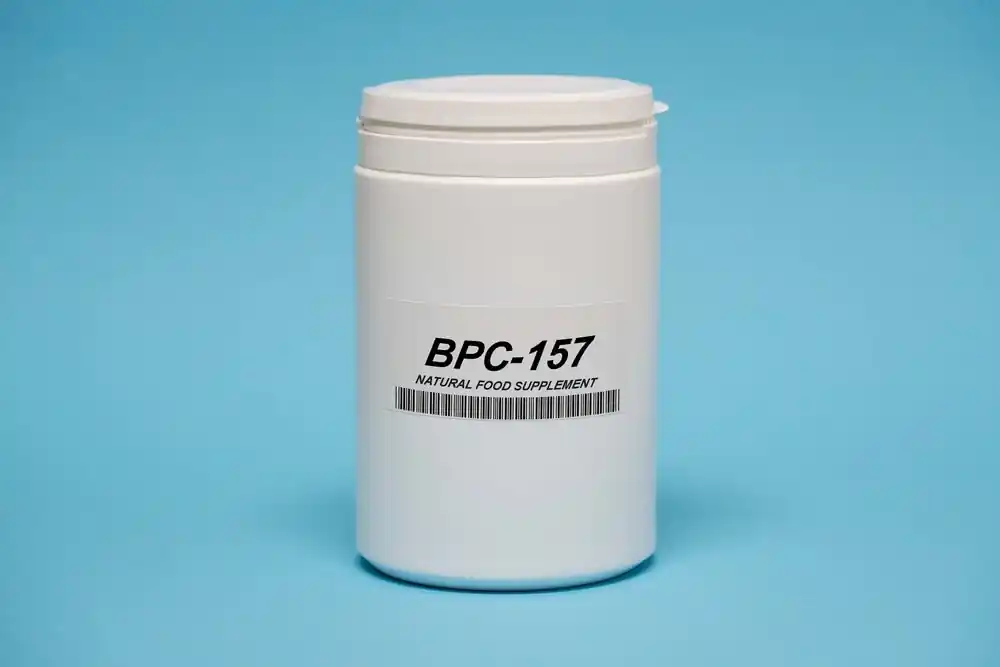
Still, visuals alone don’t confirm purity or identity. Packaging looks similar across different suppliers. If you’re using images to evaluate authenticity, pair that with documentation and lab testing references.
So… miracle healing or hidden danger?
Based on how peptide bpc 157 reviews typically read and on the practical realities of peptide quality and human variability, the honest answer is: BPC-157 sits in a gray zone of uncertain efficacy and non-trivial quality/safety concerns.
Here’s the balanced view:
- Where hope comes from: Tissue repair and inflammation pathways are biologically plausible, and some people report meaningful improvements.
- Where danger can hide: Reviews often don’t control for confounders, product quality may vary, and delaying medical evaluation can be harmful.
- What you can do: Use rigorous review-reading methods, require quality signals, and avoid treating anecdotes as medical evidence.
FAQ
Are peptide bpc 157 reviews reliable enough to decide?
They can guide you on what people tried and what they noticed, but they’re not a substitute for controlled clinical evidence. Treat them as hypotheses—especially because dosing details, sourcing quality, and concurrent rehab/medication changes are often unclear.
What should I look for in a “good” BPC-157 review?
Look for specifics: dose, route, duration, condition severity, timeline, and what else changed (PT, rest, training load, meds). Higher-quality reviews also mention sourcing/quality testing or at least give enough information to judge uncertainty.
Who should not consider BPC-157 without medical supervision?
If you have red-flag symptoms (especially with GI issues), serious injuries, or are managing significant medical conditions or taking prescription medications, involve a qualified clinician before experimenting. The biggest risk isn’t just side effects—it’s delaying proper diagnosis and treatment.
Conclusion: the next step that keeps you in control
If you’re weighing BPC-157 after reading peptide bpc 157 reviews, the safest practical approach is to shift from “miracle stories” to “decision quality.” Demand specifics from reviews, verify product quality signals, and don’t let anecdotal improvement replace medical evaluation when symptoms are persistent or severe.
Actionable next step: Write a one-page summary for yourself—your diagnosis (or working diagnosis), your current treatment plan (rehab/meds), the exact protocol you’re considering (dose/route/timeline), and what objective outcomes you’ll track. Then use the checklist in this article to score the credibility of any review or product claim you’re considering.
Discussion