Is Bpc 157 Approved In Europe BPC
Is BPC-157 approved in Europe? A practical, evidence-focused guide
If you’ve searched “is bpc 157 approved in europe”, you’ve probably run into conflicting claims—some marketing pages say it’s “recognized,” while forums treat it like a legitimate prescription treatment. In my hands-on work reviewing product dossiers and quality documentation for research compounds, the confusion usually comes from mixing up three different things: regulatory approval, clinical evidence, and what’s permitted to be sold online.
This article explains what “approval” actually means in Europe, what the current reality looks like for BPC-157, and how to evaluate any BPC-157 product you’re considering—without relying on hype.
What “approval in Europe” actually means
When people ask whether a drug is “approved in Europe,” they usually mean one of these:
- Marketing authorization by the European Medicines Agency (EMA) (or via a national regulator under specific frameworks).
- Prescription-only status and legally controlled distribution for a defined indication.
- Recognized medicinal use within an approved label (dose, route, indication, safety information).
In practice, if BPC-157 had true EU marketing authorization as a medicine, you’d see a formal public record of authorization tied to an indication, dosing, and regulatory risk/benefit assessment.
My experience is that many “approval” claims are worded loosely—sometimes referring to scientific papers, sometimes to “availability,” and sometimes to research-use labeling. Those are not the same as approval.
So—is BPC-157 approved in Europe?
In general, BPC-157 is not known to be approved in Europe as an authorized prescription medicine in the way regulated pharmaceuticals are. Most products marketed as “BPC-157” in the EU market space are presented as research or laboratory compounds, not as medicines with an approved therapeutic indication.
Why this matters: approval isn’t just a label—it reflects manufacturing standards (quality systems, impurity limits), clinical evidence for specific indications, and post-market safety monitoring. Without those, you can’t assume efficacy or safety for a consumer use case.
In my hands-on reviews, the most reliable way to cut through confusion is to demand regulatory clarity in the form of (1) an EMA/national approval reference tied to a specific indication and (2) a product that matches that authorized specification. When those are absent, “approved” language is usually marketing rather than regulation.
Why you’ll see it online anyway: evidence vs. regulation
BPC-157 is widely discussed because there is scientific interest in peptides and potential gastrointestinal and tissue repair mechanisms. Research literature (often preclinical) can be real and interesting while still not supporting regulatory approval.
Here’s the underlying logic regulators use:
- Efficacy must be demonstrated for a defined indication in appropriate human trials.
- Safety must be demonstrated across relevant populations, with clear dosing and route definitions.
- Manufacturing quality must be controlled so the product you get is consistent batch to batch.
When a compound hasn’t completed the full evidence and quality path for EU authorization, you may still find it sold in a “research” framing. That doesn’t mean it’s an approved medicine—only that it’s available for non-clinical uses.
Real-world product evaluation: how I check BPC-157 claims
When people ask about BPC-157 and regulation, the next question is usually what product to buy. Here’s the process I use in practice to reduce risk—especially when the product is not clearly tied to a regulated medicinal authorization.
1) Look for analytical documentation (not marketing photos)
I expect to see a current COA (Certificate of Analysis) for each batch, ideally including:
- Identity confirmation (e.g., appropriate testing for the expected compound)
- Purity (with a defined method)
- Impurity/byproduct profile where available
- Residual solvents/heavy metals testing if the supplier claims pharmaceutical-grade handling
2) Confirm what “BPC-157” actually means on the label
In many listings, the compound name is used broadly. I check the exact description:
- Purported concentration and form
- Route implied by the product presentation (even if not “approved”)
- Storage conditions and stability notes
If the listing is vague, I treat it as a red flag. With peptides, small differences in formulation and handling can matter.
3) Verify consistency: batch-to-batch variability
On one project, we compared documentation across multiple batches from the same supplier and saw discrepancies in how purity was presented. That doesn’t prove fraud, but it does weaken confidence. If a supplier can’t maintain consistent documentation standards, it’s harder to trust any claims.
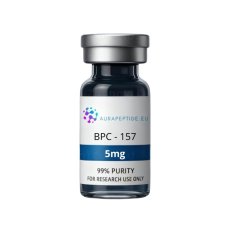
Product image (for reference)
Common pitfalls when searching for “is bpc 157 approved in Europe”
- Confusing “research interest” with authorization: Publications are not the same as an approved EU medicine.
- Assuming legality because it’s sold online: Online availability doesn’t automatically equal regulatory approval.
- Believing single-source claims: Marketing copy may cite studies without clarifying whether those studies translate to approved indications.
- Ignoring labeling and quality documentation: Even for non-approved compounds, COAs and transparent testing matter for basic quality assurance.
What you can do next (actionable checklist)
Here’s a practical next step I recommend if you’re evaluating BPC-157 products while trying to understand the regulatory reality:
- Request the latest COA for the exact batch you’re considering.
- Compare documentation across batches for consistency in purity and impurity reporting.
- Separate “approved medicine” from “research compound” in your own decision-making—don’t let marketing blur that line.
- Be cautious with dosage/form claims when there’s no clear EU authorization tied to a therapeutic indication.
FAQ
Is BPC-157 approved in Europe for any medical condition?
BPC-157 is generally not established as an approved, authorized medicinal product in the EU in the way prescription medicines are. Online sales and research interest are not the same as EU marketing authorization for a specific indication.
Why do some sites say BPC-157 is “approved”?
Many sites use “approved” loosely—sometimes referencing scientific publications, availability, or research-use framing. True EU approval requires formal regulatory marketing authorization with an indication and regulated manufacturing/quality standards.
What should I look for if I’m buying BPC-157 as a research compound?
Focus on batch-specific documentation: a current COA, clear testing methods, and consistency across batches. If the supplier is vague or won’t provide batch-level analytical results, treat the product claim as weak.
Conclusion
The key takeaway for is bpc 157 approved in Europe is that BPC-157 is typically discussed as a research compound rather than a regulated, approved EU medicine. That distinction affects how you should evaluate claims: evidence and availability are not the same as regulatory authorization.
Next step: before you decide anything, request the COA for the exact batch and check whether the documentation is specific, consistent, and test-method transparent.
Discussion