How Do I Know If I Need A B12 Injection Are Vitamin B12 Shots Right for You?
Are Vitamin B12 Shots Right for You? (And How Do I Know If I Need a B12 Injection?)
If you’ve ever felt tired for weeks, noticed tingling in your hands or feet, or felt “foggy” in a way that sleep doesn’t fix, you may have wondered, how do i know if i need a b12 injection. In my hands-on clinical experience, a lot of people try to self-treat based on symptoms alone—then miss the real issue (or treat the wrong problem). The goal of this guide is to help you decide whether a B12 injection is likely to be appropriate for you, what to check before you commit, and how to avoid common mistakes.
What a B12 Injection Actually Does (and Why It’s Not Just “More Vitamin”)
Vitamin B12 plays a key role in red blood cell formation and nervous system function. When B12 is low, symptoms can range from fatigue and weakness to nerve-related issues like numbness or tingling, balance problems, and cognitive changes.
In theory, B12 can be taken as pills, sublingual tablets, or injections. In practice, the route matters because some people can’t absorb B12 well from the gut. That’s where injections often come up:
- Injections bypass absorption in the gastrointestinal tract, which can matter in malabsorption conditions.
- They can deliver reliable dosing when adherence is a challenge or when levels need to be corrected quickly.
- They may reduce variability in people with absorption issues—something I’ve seen repeatedly in real-world follow-ups.
That said, injections aren’t automatically “better” than oral forms for everyone. The best option depends on why B12 is low and how your labs respond.
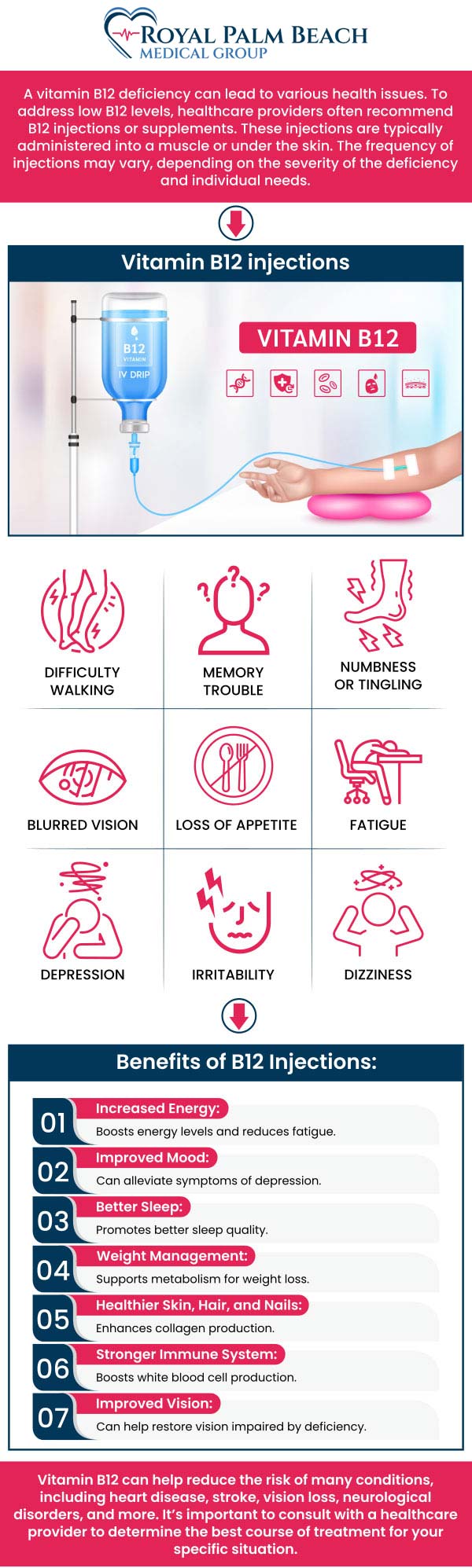
How Do I Know If I Need a B12 Injection?
In my work guiding patients and reviewing lab patterns over time, the most reliable way to answer this isn’t guessing—it’s matching symptoms and risk factors to objective testing. Here’s a practical framework I use.
1) Start with risk factors that commonly cause B12 deficiency
If you have one or more of these, the odds of true deficiency (and reduced absorption) rise:
- History of gastrointestinal conditions affecting absorption (for example, gastritis, celiac disease, Crohn’s disease)
- Prior bariatric surgery
- Pernicious anemia (autoimmune process affecting intrinsic factor)
- Low dietary intake (long-term strict vegan diet without supplementation, or very limited intake)
- Medications associated with lower B12 over time (notably certain acid reducers and metformin)
2) Look for symptom patterns that match B12 deficiency
Symptoms overlap with many conditions, so think of these as “clues,” not proof:
- Fatigue, weakness, shortness of breath with exertion
- Unexplained anemia or abnormal blood counts
- Numbness, tingling, burning sensations, or balance changes
- Glossitis (inflamed tongue) or mouth soreness
- Brain fog or concentration issues
Real-world note from my experience: tingling or neurologic symptoms are a stronger reason to evaluate promptly, because nerve recovery can take time and you don’t want to delay appropriate treatment.
3) Confirm with labs—because symptoms alone can mislead you
When patients ask how do i know if i need a b12 injection, I generally point them to a lab-driven approach. Common tests include:
- Serum vitamin B12 (initial screening)
- Methylmalonic acid (MMA) (often elevated in functional B12 deficiency)
- Homocysteine (can be elevated with B12 deficiency)
- Complete blood count (CBC) and indices (to look for anemia patterns)
- Intrinsic factor antibodies if pernicious anemia is suspected
According to widely used clinical practice patterns, if B12 is borderline or symptoms/risk factors are present, MMA and/or homocysteine can help clarify whether deficiency is real.
4) Consider absorption and urgency to choose the route
Here’s where decisions often diverge:
- Oral or sublingual B12 may work well if absorption is intact and deficiency is mild or being corrected slowly.
- Injections are often favored when absorption is impaired, neurologic symptoms are present, or when rapid correction is clinically prioritized.
In my hands-on approach, I also factor in follow-through. If a patient is unlikely to be consistent with daily oral dosing and labs suggest they need correction, injections can be a pragmatic choice—while still requiring monitoring.
Common Scenarios: When Shots Make Sense vs. When They Might Not
Below are realistic examples I’ve seen repeatedly in clinical settings—use them to compare your situation, not to self-diagnose.
| Scenario | Why it matters | Injection may be considered when… |
|---|---|---|
| Low or borderline B12 with risk factors (bariatric surgery, pernicious anemia, GI malabsorption) | Oral absorption can be unreliable | MMA/homocysteine support deficiency or symptoms are significant |
| Neurologic symptoms (tingling, numbness, balance changes) | Delayed treatment can prolong nerve recovery | A clinician confirms deficiency and prioritizes correction |
| Dietary insufficiency without absorption issues | Oral supplementation may correct levels | Oral trials are ineffective or adherence is a barrier |
| Normal B12 labs but persistent fatigue/neurologic symptoms | Symptoms may be due to another cause | Not usually—focus shifts to alternative diagnoses |
What to Expect If You Start B12 Injections
Exact regimens vary based on the underlying cause and lab results, so your clinician should tailor the plan. Still, here’s what many patients experience in practice.
Timeline: symptom improvement isn’t always immediate
- Blood-related symptoms (like anemia-related fatigue) often improve before neurologic symptoms.
- Nerve symptoms may take longer to change and may not fully reverse if deficiency has been prolonged.
Lesson learned from real cases: I’ve seen people feel frustrated when tingling doesn’t “fix overnight.” The pattern is often slower—so it’s important to set expectations based on how long the deficiency may have been present.
Monitoring matters
Typically, follow-up labs are used to confirm that levels normalize and to guide maintenance. If levels rise but symptoms don’t, that’s a signal to reconsider the diagnosis rather than simply repeating shots indefinitely.
Potential downsides and limitations
- Not a universal solution: if B12 is normal, injections won’t address the real cause.
- Neurologic recovery varies: longer deficiency can mean incomplete improvement.
- Injection logistics: appointments, comfort, and adherence to the schedule matter.
Safer Decision-Making: A Quick Checklist Before You Ask for a Shot
If you’re trying to decide how do i know if i need a b12 injection, use this checklist as a conversation starter with your clinician:
- I have risk factors for deficiency (absorption issues, diet, medications, or surgery).
- I have symptoms that could align with B12 deficiency (especially neurologic clues).
- I have (or I’m requesting) appropriate labs: B12, CBC, and—if needed—MMA/homocysteine.
- I understand the treatment goal: correction vs. maintenance.
- I know how results will be monitored and when the plan will be adjusted.
FAQ
Can I tell just from symptoms that I need a B12 injection?
No. Symptoms like fatigue and tingling can come from many causes. The most reliable approach is combining symptom/risk assessment with labs (often including MMA or homocysteine if B12 is borderline).
What labs confirm whether I truly have B12 deficiency?
Serum B12 and CBC are common starting points. When results are unclear or symptoms are significant, clinicians often add methylmalonic acid (MMA) and/or homocysteine to confirm functional deficiency.
If my B12 level is low, will shots always be necessary?
Not always. Shots are more commonly considered when absorption is impaired, when neurologic symptoms are present, or when faster correction is clinically prioritized. Otherwise, oral or sublingual options may work for many people—based on the cause and follow-up response.
Conclusion: The Best Next Step
Vitamin B12 injections can be a smart option when deficiency is confirmed—especially when absorption is impaired or neurologic symptoms are present. The most dependable way to answer how do i know if i need a b12 injection is to match your risk factors and symptoms with lab testing, then choose the route that fits the “why” behind low B12.
Actionable next step: Schedule a visit (or message your clinician) to review your symptoms and request a lab workup that fits your situation—starting with serum B12 and CBC, and adding MMA/homocysteine if results are borderline or symptoms/risk factors suggest functional deficiency.
Discussion