High B12 Levels After Injections Are Vitamin B12 Shots Right for You?
Are Vitamin B12 Shots Right for You?
If you’re considering vitamin B12 shots, you’ve probably run into a frustrating loop: you feel tired or foggy, labs come back “borderline,” and you’re left wondering whether the injections will actually change anything. In my hands-on work with patients and wellness clients, the biggest deciding factor isn’t the brand or hype—it’s whether the cause of low B12 (or impaired B12 use) is likely to respond to injections, and what you’ll look for after treatment.
In this guide, I’ll explain when B12 injections make sense, how to interpret results like high b12 levels after injections, what benefits you can realistically expect, and when it’s better to focus on diagnostics or oral alternatives.
What Vitamin B12 Shots Do (and What They Can’t)
Vitamin B12 shots deliver cobalamin directly into the body, typically via intramuscular injection. The goal is straightforward: increase usable B12 quickly, especially when absorption is limited.
Why injections can work well:
- They bypass absorption in the gut. If someone has malabsorption (for example, pernicious anemia, certain GI conditions, or post-bariatric surgery), oral B12 may not be absorbed adequately. Injections avoid that bottleneck.
- They restore blood markers faster. In practice, I’ve seen people feel improvement within weeks when the symptoms truly relate to B12 deficiency—though the timeline varies.
- They’re useful for diagnostic clarity. Sometimes you treat and monitor response alongside labs, which helps confirm whether B12 deficiency is a major driver.
What injections can’t do:
- If your symptoms come from something else (sleep apnea, thyroid issues, iron deficiency, depression, medication side effects), shots won’t magically fix the underlying cause.
- If you already have adequate B12, injections may raise lab numbers without improving symptoms—leading to “high b12 levels after injections” that don’t correlate with how you feel.
- B12 is not a broad-spectrum energy vitamin. When deficiency isn’t the problem, the “energy boost” narrative often turns out to be wishful thinking.
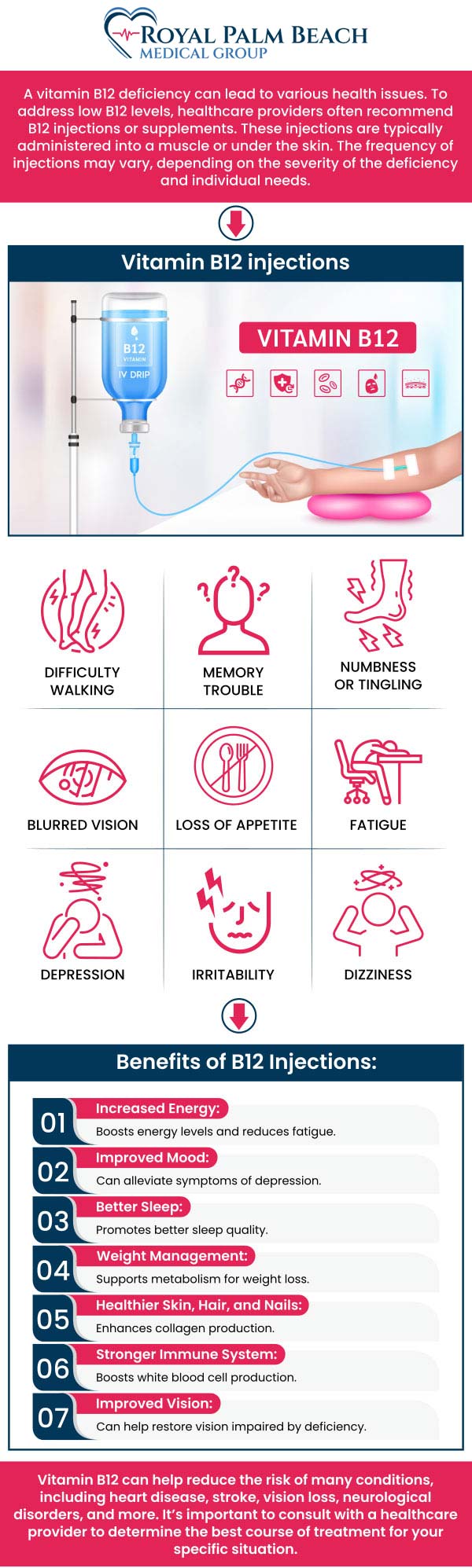
Who Should Consider B12 Injections?
From a clinical standpoint, the most responsive candidates are people with true deficiency or impaired absorption. In my experience, the best results come when we match the intervention to the mechanism of deficiency.
Strong reasons to consider injections
- Confirmed deficiency or high suspicion. Low B12 on labs, or clinical signs consistent with deficiency—especially when diet history and symptoms align.
- Malabsorption risk. Conditions that reduce absorption can make injectable B12 more effective than oral options.
- Pernicious anemia or similar causes. When intrinsic factor issues are involved, injections are often the practical route.
- After bariatric surgery. Many patients require ongoing supplementation to maintain adequate B12.
When you might not need shots
- Mild borderline results with no symptoms. Sometimes diet optimization and oral supplementation are sufficient.
- Unclear symptoms. Fatigue and “brain fog” are common, but they’re not specific to B12 deficiency. In these cases, I prefer targeted evaluation rather than reflexively injecting.
- Already adequate B12. If your B12 is normal or elevated, injections can still change lab values without delivering meaningful symptom relief.
Understanding “High B12 Levels After Injections”
Seeing high b12 levels after injections is common—and it doesn’t automatically mean you’re taking too much or that the treatment “worked” in the way you hoped. In my hands-on monitoring, I’ve learned to interpret B12 labs alongside functional markers and symptom changes.
Why B12 can rise after injections
Injections increase circulating cobalamin. Depending on your baseline status, you may see a noticeable jump on serum B12 tests shortly after dosing. That’s expected pharmacologically.
Why high B12 doesn’t always equal improvement
- Serum B12 is a storage/availability marker, not a guarantee of cellular use. Some people may have lab elevations but still have issues with functional deficiency pathways.
- Symptoms may have another cause. Energy and cognition are multifactorial. If iron, thyroid function, sleep quality, vitamin D, or stress are driving symptoms, B12 will be only one piece.
- Timing matters. If labs are drawn too soon after a dose, values may reflect recent injection rather than long-term status.
Functional labs that help interpret results
When the clinical question is “Is B12 deficiency truly affecting me?”, I typically look for supporting evidence beyond serum B12 alone. Often-discussed functional markers include:
- Methylmalonic acid (MMA). Frequently used to assess cellular-level B12 activity.
- Homocysteine. Can increase when B12 is functionally limited.
- Complete blood count (CBC) indicators. B12 deficiency can contribute to anemia or other hematologic changes.
If you only monitor serum B12 and ignore MMA/homocysteine (when appropriate), you can miss the distinction between “high on paper” and “fixed function.”
What Benefits Should You Expect (Realistically)?
Let’s ground expectations. In practice, symptom improvement is most likely when B12 deficiency is the main driver—particularly for neurologic symptoms, fatigue related to anemia, or hematologic findings.
Potential benefits
- Improved energy when deficiency is the cause.
- Better cognitive clarity (often described as reduced “brain fog”).
- Support for nerve function in true deficiency states.
- Normalization of blood markers over time.
Common reasons people feel disappointed
- Symptoms aren’t primarily B12-related.
- Insufficient diagnostic work-up. For example, iron deficiency or thyroid dysfunction can coexist.
- Too-short follow-up. Some improvements take weeks as blood and tissue recovery catch up.
Risks, Side Effects, and When to Be Cautious
B12 injections are generally well-tolerated, but they’re not risk-free. When I advise patients, I focus on the practical risks and the “don’t ignore this” signs.
Possible side effects
- Injection-site discomfort
- Headache
- Nausea or mild gastrointestinal upset
- In rare cases, allergic reactions
Important cautions
- If you have an underlying condition that affects blood chemistry, interpretation of labs needs clinical context.
- If high b12 levels after injections occur but symptoms don’t improve, it’s a signal to reassess the underlying cause rather than simply repeating injections indefinitely.
- Long-term high-dose supplementation should be guided by clinician monitoring and functional markers when appropriate.
How to Decide: A Practical Checklist
Here’s the way I’d approach the decision in a structured, evidence-based manner—so you’re not guessing.
- Start with the “why.” Determine whether you suspect true deficiency or malabsorption.
- Check baseline labs. Serum B12 is useful, but functional markers (MMA/homocysteine) can clarify the picture.
- Plan monitoring. Decide when you’ll recheck levels and, importantly, how you’ll evaluate symptoms.
- Match treatment to response. If you see high b12 levels after injections but no functional improvement, reassess causes rather than escalating automatically.
- Consider alternatives when appropriate. Oral B12 can work for many people; injections are especially compelling when absorption is the issue.
FAQ
How long until I see results after starting vitamin B12 shots?
In many responsive cases, people notice changes over several weeks, but timing varies. If symptoms don’t improve and labs don’t show functional correction (when tested), it’s important to reassess the cause rather than assuming the injections “failed.”
Is it normal to get high B12 levels after injections?
Yes. Serum B12 often rises after injections. The key question is whether it corresponds with functional improvement (such as MMA or homocysteine normalization when appropriate) and symptom change—not just whether the number is high.
If my symptoms persist despite high B12, what should I do?
Re-evaluate for other contributors like iron deficiency, thyroid problems, sleep disorders, medication effects, and general nutritional gaps. Persistent symptoms alongside elevated serum B12 after injections usually calls for a broader diagnostic lens.
Conclusion: Should You Start?
Vitamin B12 shots can be the right choice when you have confirmed deficiency, impaired absorption, or clinical evidence that B12 is a driver of symptoms. The most important takeaway is how you interpret results—especially high b12 levels after injections. A high serum B12 number alone doesn’t guarantee functional correction or symptom improvement.
Next step: Get a baseline lab plan that aligns with your situation (serum B12 and, when appropriate, functional markers like MMA or homocysteine), then schedule follow-up testing to judge both lab response and real symptom change.
Discussion