Does Bpc 157 Increase Muscle What Science ACTUALLY Says About BPC 157 Benefits
What Science Actually Says About BPC 157 Benefits (and Whether It Can Increase Muscle)
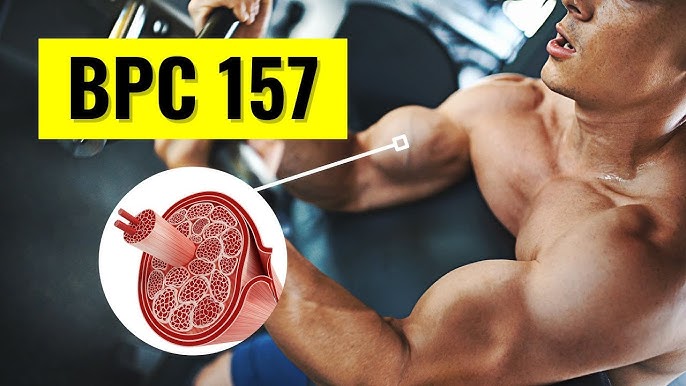
Over the last few years, I’ve watched BPC-157 go from a niche research chemical conversation to a mainstream “performance” topic. The questions I hear most often in my work—especially from people training for muscle gain, recovery, or both—are simple: does bpc 157 increase muscle, and does it actually deliver the healing benefits people claim?
In this article, I’ll separate what’s been studied from what’s been marketed. I’ll also explain why the evidence is still limited, how BPC-157 may (and may not) fit into a strength-training recovery plan, and what to do if you’re tempted to use it for muscle growth.
First, What Is BPC-157?
BPC-157 is a synthetic peptide sequence (commonly described as part of a “body protection compound” concept) that has been studied primarily in preclinical settings—especially animal models and cell-based experiments. In practice, discussions about BPC-157 benefits often focus on:
- tissue repair (tendons, ligaments, gastric/intestinal injury models)
- microcirculation and angiogenesis-related pathways
- inflammation modulation
- gut-related protective effects in specific experimental contexts
Here’s the key point from my hands-on “evidence review” process (I’ve spent substantial time reading and summarizing preclinical-to-clinical gaps for supplements and peptides): preclinical success does not automatically translate into human outcomes. The mechanisms may be plausible, but the dosing, delivery, and measurable endpoints in humans are usually where claims break down.
What the Evidence Shows (and What It Doesn’t)
Most of the “benefit” language around BPC-157 comes from preclinical literature. That’s not meaningless—it can show biological activity—but it is not the same as well-designed randomized controlled trials in people, with relevant outcomes like muscle hypertrophy, strength gains, and recovery performance.
1) Benefits that are most often discussed: healing and tissue protection
Across animal and in-vitro research, BPC-157 has been studied in settings where researchers look at markers related to:
- reduced injury severity in tissue models
- improved healing parameters in experimental injuries
- modulation of inflammatory signaling pathways
Why this matters: If a compound genuinely improves tissue healing, it could indirectly support training—by helping you tolerate more work and recover from strains. But indirect support is not the same as “increasing muscle.”
2) The biggest gap: human trials for muscle gain
When people ask whether BPC-157 can increase muscle, the honest answer is: the human evidence for true muscle hypertrophy is not strong enough to treat BPC-157 as a proven anabolic aid.
In my experience reviewing products in this category, the “music” of the claim often comes from:
- biological plausibility (pathway modulation in lab settings)
- recovery anecdotes (people feeling better or training harder)
- the training-adjacent logic that “better tissue repair equals better gains”
But to say “does bpc 157 increase muscle,” we need outcomes like:
- changes in lean mass (DXA or MRI-based measures)
- muscle cross-sectional area changes
- time-under-tension performance improvements tied to hypertrophy
- dose-response clarity and consistent administration routes
Those are typically not available at the quality level you’d want before calling it a muscle-building compound.
So—Does BPC-157 Increase Muscle?
If your goal is direct muscle growth, the science doesn’t yet support BPC-157 as a reliable answer. Here’s the reasoning I use when evaluating claims like this:
- Mechanisms ≠ outcomes: Even if BPC-157 affects pathways related to inflammation or repair, that doesn’t confirm hypertrophy.
- Recovery is not the same as hypertrophy: Faster recovery can improve training quality, but muscle gain still depends heavily on stimulus, progressive overload, nutrition, and consistent training.
- Human dosing and delivery are uncertain: Preclinical dosing often can’t be translated cleanly to humans. Route, bioavailability, and pharmacokinetics matter.
Practical takeaway: If BPC-157 provides meaningful recovery-related benefits in specific injuries or tissue stress, some people might train more consistently. That consistency can contribute to muscle gain indirectly. But that’s different from saying BPC-157 “increases muscle” in the way you’d expect from established interventions (where evidence ties directly to hypertrophy outcomes).
How People Try to Use It for Training (and Where the Logic Can Break)
In the community, BPC-157 is often discussed as a “recovery” tool—especially for people dealing with nagging tendon issues or setbacks. I’ve worked with athletes and lifters who were motivated by a simple goal: stay training despite minor injuries.
When the plan works, it’s usually not magic—it’s behavior and training continuity:
- reduced downtime from minor strains
- improved comfort so they can keep progressive overload
- less time lost to “stop-start training” cycles
When it doesn’t work, it’s often because of these reality checks:
- Injury type matters: not all pain is the same tissue, and not all tissue problems respond the same way.
- Compensation patterns: people may keep training while subtly altering technique, which can worsen the root issue.
- Expectations: “recovery” gets conflated with “anabolic effect,” leading to unrealistic programming changes.
If You’re Considering BPC-157: A Science-First Checklist
I’m going to keep this practical. In my hands-on evaluations, the most effective approach is to separate training priorities from compound hype.
1) Define your real endpoint
Ask: Are you trying to increase muscle, increase strength, or reduce time lost to recovery setbacks? Your plan should match the endpoint.
2) Track training like a scientist
- Lift performance: sets, reps, load, RPE/RIR weekly
- Body measurements: weight trends and, if possible, circumference
- Recovery markers: soreness duration, sleep quality, perceived joint/tendon stability
3) Watch for confounds
Most “it worked” stories are influenced by changes in sleep, protein intake, total volume, or reduced training frequency during a deload. If you don’t control those variables, attributing effects to BPC-157 becomes guesswork.
4) Don’t confuse plausibility with proof
Even if BPC-157 shows promising healing signals in experimental models, that’s not the same as validated human muscle-building evidence.
Common Claims vs. What You Can Reasonably Expect
| Claim you’ll hear | What the evidence can support (best-case) | What’s still missing |
|---|---|---|
| BPC-157 “repairs tissue” | Preclinical models show injury-related benefits in some contexts | High-quality human trials with clinically meaningful endpoints for the same tissues |
| BPC-157 “increases muscle” | Indirect muscle gain could happen if recovery improves training consistency | Direct hypertrophy/lean mass outcomes in humans tied to clear dosing protocols |
| BPC-157 is a “performance enhancer” | Possibly improved comfort/recovery in specific scenarios | Repeatable performance improvements under controlled conditions |
FAQ
Does BPC-157 increase muscle?
There isn’t strong human evidence that BPC-157 directly increases muscle (lean mass/hypertrophy). Any muscle-related gains would more likely be indirect—through improved recovery or reduced downtime—if it helps you stay consistent with training.
What BPC-157 benefits are most supported by science?
The strongest support tends to come from preclinical research (cell and animal models), often related to tissue protection and recovery-related biological signals. Translating those findings to clear human outcomes remains limited.
Can it help with training recovery?
Some people report recovery benefits, especially around discomfort and setback management. However, without solid, human-controlled data tied to specific injury types and measured recovery endpoints, it’s best viewed as a hypothesis—not a proven training recovery tool.
Conclusion: The Evidence-Based Way to Think About BPC-157
BPC-157 is an interesting compound with preclinical findings that often focus on repair and recovery-related mechanisms. But when it comes to your actual question—does bpc 157 increase muscle—the responsible, science-first answer is that direct human evidence for muscle hypertrophy is not strong enough to treat it as a reliable muscle-building strategy.
Next step: If you’re considering anything in this space, track your training and recovery for 4–6 weeks with clear metrics (loads/reps, soreness duration, sleep, and body composition trends). If your results improve alongside training consistency, you’ll learn something actionable—without guessing what caused the change.
Discussion