Why Do People Inject B12 Are B12 Shots Safe? Royal Palm Beach Medical Group
Have you ever wondered why do people inject B12 when they could just eat more—or take a supplement? In my own practice, I’ve seen the same pattern: patients come in frustrated because they’ve tried pills, changed their diet, or “fixed” their routine, yet they still feel fatigued or foggy. Others simply heard injections “work faster,” and they want the quick fix.
So the real question becomes: Are B12 shots safe? In this guide, I’ll walk you through what B12 injections are meant to do, who should consider them, what the safety concerns actually are, and how to make the decision responsibly—especially with clinical context like symptoms, lab results, and underlying causes.
What B12 shots are (and what they’re not)
Vitamin B12 (cobalamin) is required for red blood cell formation, neurologic function, and DNA synthesis. When people ask why do people inject b12, the common answer is simple: injections bypass absorption issues and deliver the vitamin directly.
However, it helps to be precise about expectations. Injections are not a general energy “booster” for everyone. If your B12 is already normal, an injection may not produce noticeable changes, and chasing symptom relief without identifying the cause can waste time.
Why injections can be chosen
- Absorption problems: conditions like pernicious anemia, certain gastrointestinal disorders, or post-bariatric surgery issues can make oral B12 less effective.
- Documented deficiency: low B12 on labs plus symptoms is a common clinical reason.
- Adherence and speed of correction: some patients prefer a scheduled injection rather than daily pills.
Where the “fast results” idea comes from
In real-world settings, people sometimes feel better as deficiency is corrected—especially when anemia or neurologic symptoms are involved. But the timeline depends on the starting level, the underlying cause, and whether other issues (iron deficiency, thyroid disorders, sleep apnea, depression/anxiety, medication effects) are contributing.
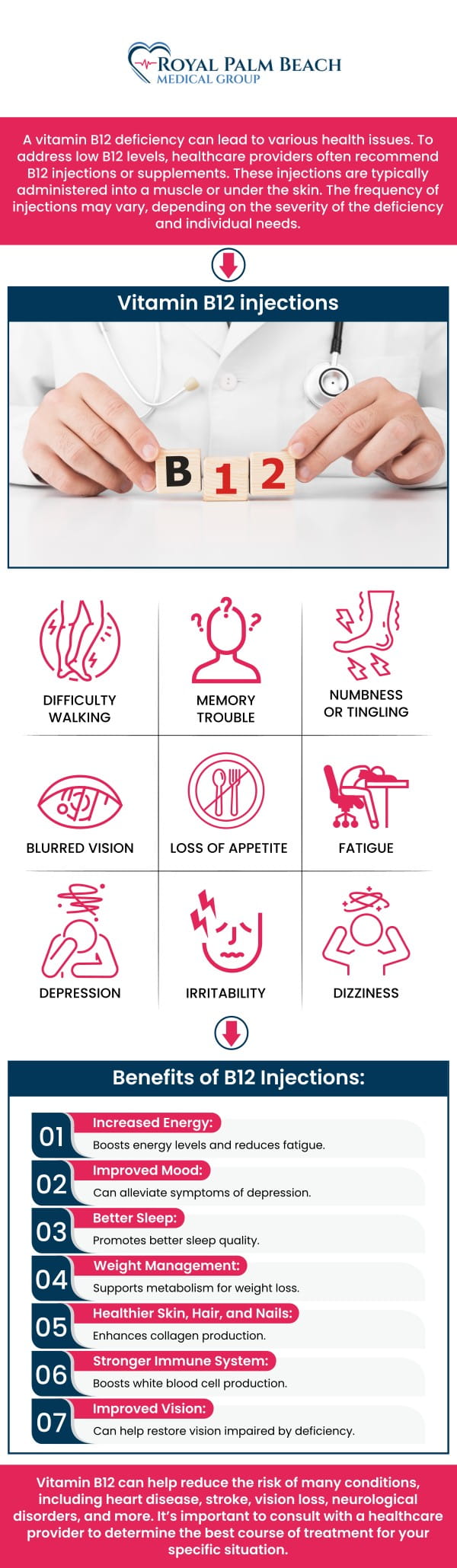
Are B12 shots safe? The practical safety picture
In my hands-on work, “safe” isn’t about a magic product—it’s about correct indication, appropriate dosing, sterile technique, and follow-up. When B12 shots are used appropriately (often intramuscularly), they’re generally well tolerated.
Common side effects (usually mild)
- Injection-site discomfort: soreness, redness, or swelling where the shot was given.
- Headache or mild nausea in some patients.
- Transient changes in energy or mood: if deficiency is being corrected, symptoms may shift.
What people mean by “risk” (and what to watch for)
The most important safety considerations are situational. For example:
- Allergic reactions: rare, but possible. Any history of reaction to B12 formulations or injection components should be discussed with a clinician.
- Underlying diagnosis still matters: B12 deficiency can be caused by serious conditions. If you only treat with injections and skip evaluation, you may miss the root cause.
- Medication and comorbidity review: clinicians consider overall health, concurrent treatments, kidney or liver issues, and neurologic symptoms.
In short: B12 shots are typically safe when prescribed for the right person, at the right dose, with appropriate technique and monitoring. They’re not a substitute for evaluating persistent symptoms.
When B12 injections make sense (and when they don’t)
To answer why do people inject b12 in a way that’s clinically grounded, I look at one question first: Is B12 deficiency likely or confirmed? If the answer is no, the risk-benefit may not favor injections.
More likely to be appropriate
- Lab-confirmed low B12 (or borderline levels with consistent symptoms).
- Pernicious anemia or suspected impaired absorption.
- History of gastrointestinal surgery or conditions associated with malabsorption.
- Neurologic symptoms (for example, numbness/tingling) alongside concern for deficiency—this warrants timely evaluation.
Less likely to be the right first move
- Symptoms without evidence of deficiency (fatigue, “brain fog,” and low energy have many causes).
- Situations where other deficiencies are more likely (iron deficiency, vitamin D deficiency) and haven’t been checked.
- Repeated injections without follow-up labs or a clear diagnosis plan.
In my experience: the “symptom mismatch” problem
I’ve cared for patients who felt convinced that injections were the missing piece because friends recommended them. In several cases, the real driver wasn’t B12 alone—it was iron deficiency, thyroid dysfunction, stress-related sleep disruption, or medication effects. Once the underlying issue was addressed, energy improved more consistently than when only B12 injections were used. That’s why I emphasize: treat the cause, not just the vitamin label.
How clinicians decide dosing and monitoring
There isn’t one universal schedule that fits every patient. Decision-making usually depends on deficiency severity, symptoms, and the underlying cause of low B12.
Common clinical approaches (conceptual)
- Initial repletion: dosing schedules often aim to rapidly correct deficiency.
- Maintenance: once stable, patients may need periodic injections or a different plan if absorption remains impaired.
- Reassessment: follow-up may include repeat labs and symptom check-ins.
What labs are often considered
Clinicians may review not only B12 levels but also supportive markers (commonly used to interpret borderline cases or functional deficiency). Your clinician may individualize this based on your history and symptoms.
Best practices for safety when getting B12 shots
If you’re considering injections, you can reduce risk by following a safety-first process.
- Use a licensed, clinical setting: sterile technique and proper medication handling matter.
- Get an indication-based plan: ask whether injections are recommended due to labs, absorption issues, or specific symptoms.
- Discuss your full medical history: include prior allergies, neurologic symptoms, anemia history, GI conditions, and current medications.
- Track response and side effects: note injection-site reactions and any changes in symptoms.
- Recheck when appropriate: if you’re doing serial injections, there should be a follow-up plan.
FAQ
Why do people inject B12 instead of taking pills?
People inject B12 primarily when they have absorption problems or confirmed deficiency, because injections bypass the digestive tract. Some also prefer a scheduled injection, especially when oral supplements haven’t corrected low levels.
What are the main risks of B12 shots?
The most common issues are mild injection-site reactions. Rarely, allergic reactions can occur. The bigger clinical risk is not medical “toxicity,” but failing to evaluate why B12 is low or why symptoms are present in the first place.
How soon should someone feel better after B12 injections?
It depends on the cause and baseline severity. Some improvement can occur as deficiency is corrected, but neurologic symptoms may take longer, and fatigue from other causes won’t necessarily resolve with B12 alone. A clinician should help set expectations using your labs and symptom pattern.
Conclusion: safe when used for the right reason
B12 shots are typically safe when they’re prescribed for an appropriate indication—most often confirmed deficiency or impaired absorption—and administered in a clinical, sterile setting with follow-up. The strongest reason people ask why do people inject b12 is because injections can overcome absorption barriers; the safest results come when the underlying cause is addressed, not just the vitamin.
Next step: If you’re considering injections, schedule a clinician visit to review symptoms and labs (or discuss whether labs are needed first), then confirm a clear injection plan and follow-up timeframe.
Discussion